

What is Incline Conservation?


Dr. Robert Crabtree
Founder of Incline Conservation
and "Wally" (Alfred Russell Wallace)
History
Incline Conservation’s roots trace back to Yellowstone National Park, where our founder, Dr. Robert Crabtree, arrived just after the historic 1988 fires. What began as a childhood fascination grew into decades of ecological research in the Greater Yellowstone Ecosystem—leading more than 120 multi-year projects on fire recovery, floods, disease, drought, wolf reintroduction, and shifting wildlife migrations.
The lessons are clear: ecosystems thrive when natural processes are allowed to function, and solutions to environmental crises must begin at the individual, community, and watershed scale. Iconic species serve as powerful messengers, connecting human actions to ecological outcomes, and teaching us how to adapt.
Our history affirms two simple truths: to save life on Earth, we must restore habitat and coexist. That requires a new conservation culture—one rooted in biocentric values, collective action, and the humility to let nature lead the way.

The gravity of the problem
Around 6,500 species of wild mammals still roam the Earth as they did 10,000 years ago. However, back then, they accounted for over 99% of the planet's terrestrial mammal biomass, with humans accounting for less than 1%. Today, those wild mammals have been reduced to less than 4%, while humankind, along with our newly domesticated species, now account for 96%! During those catastrophic declines, the most severely affected groups were large carnivores and their prey. They were villified, subjugated, and displaced to small, fragmented amounts of often suboptimal habitats, while domestic species consume enormous quantities of food each day to feed us. As wild carnivores and their prey attempt to survive and reproduce, they will be in constant conflict with humans and our domestic species (animals and crops) until we learn to coexist with them.
To mediate those conflicts and retain the high value of large mammals for ecosystem health, scientists and practitioners have worked together to develop and apply effective non-lethal coexistence tools. In addition, decades of research has shown the ineffectiveness of killing carnivores to reduce depredations or to increase game populations, especially when considering the alternative non-lethal tools if one accounts for all costs and benefits. Ironically, indiscriminate killing is often counterproductive and spurred the creation of coexistence science in the 1980s that offers win-win solutions for people and wildlife. From individual species to their conflicts with livestock, crops, and commercial operations, non-lethal coexistence strategies work when they align with natural processes.
Decades of research, for example, have shown the ineffectiveness of killing carnivores to reduce depredations or to increase game populations, especially when considering the alternative non-lethal tools if one accounts for all costs and benefits. Ironically, killing can also be counterproductive, especially over time. From individual species to their conflicts with livestock, crops, and commercial operations, non-lethal coexistence strategies work when they align with natural processes. Coexistence science has been growing since the 1980s, offering win-win solutions for people and wildlife.
What we need now is not more research, but applied knowledge. In particular, adaptive, science-based monitoring can guide responses to climate change, land-use pressures, human-wildlife conflict, and political upheaval – if it is implemented and communicated effectively. The future of conservation depends on transforming tribalism into an altruistic community of collaboration, open-mindedness, critical thinking, transparency, data sharing, and the unification of scientists and practitioners around a shared ethic of coexistence, trust, and hope.

A laboratory for the World
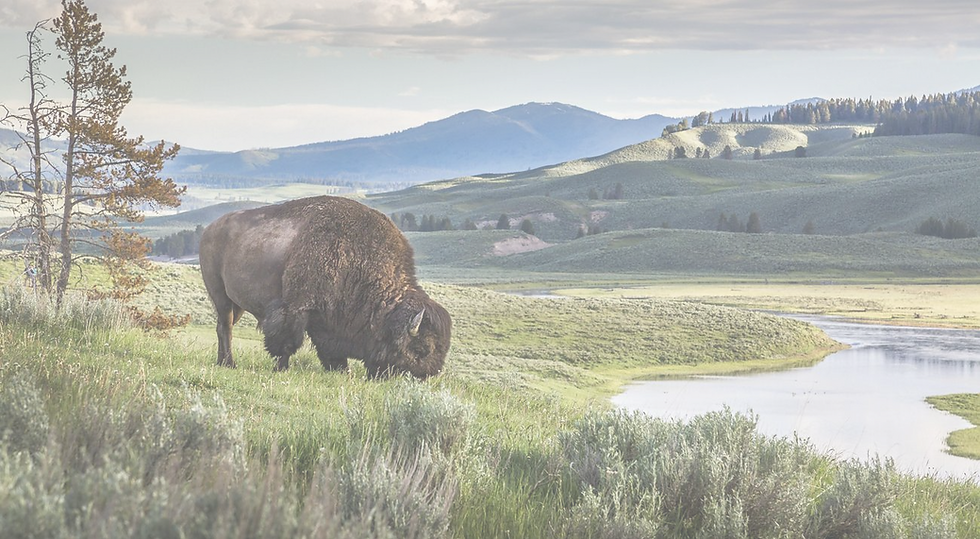
Our setting is the renowned three-state region called the Greater Yellowstone Ecosystem (GYE), which features the world’s first national park, surrounded by massive wilderness areas, and is arguably the most studied ecosystem on Earth. It has led the world in conservation, serving as a treasure trove of information to learn from, and providing a baseline to gauge the impacts of humans, paving the way for the restoration of ecosystems worldwide. Since its inception in 1872, it has been impacted by biological and physical fragmentation, inconsistent and uncoordinated management, development, extreme weather events, and societal polarization. Collectively, these natural and policy experiments show how humans can successfully adapt and coexist with the other 10 million species on Earth.
A Solution
In response, Incline Conservation will focus on truth-telling lessons from compelling ‘science’ experiences to craft sustainable solutions based on science, economics, and ethics. This will be the centerpiece of a hard-hitting communication strategy, based on writing – including scientific publications and their summaries, essays, blogs, and consensus scientific opinion letters – that draws upon the science of Yellowstone, a focus of national and global attention since 1870. During our time in the GYE, we took a holistic, long-term, systems approach focusing on how Nature works, primarily from the perspective of the controversial charismatic species – carnivores and large herbivores – and the safe, stronghold habitats they need to survive.